
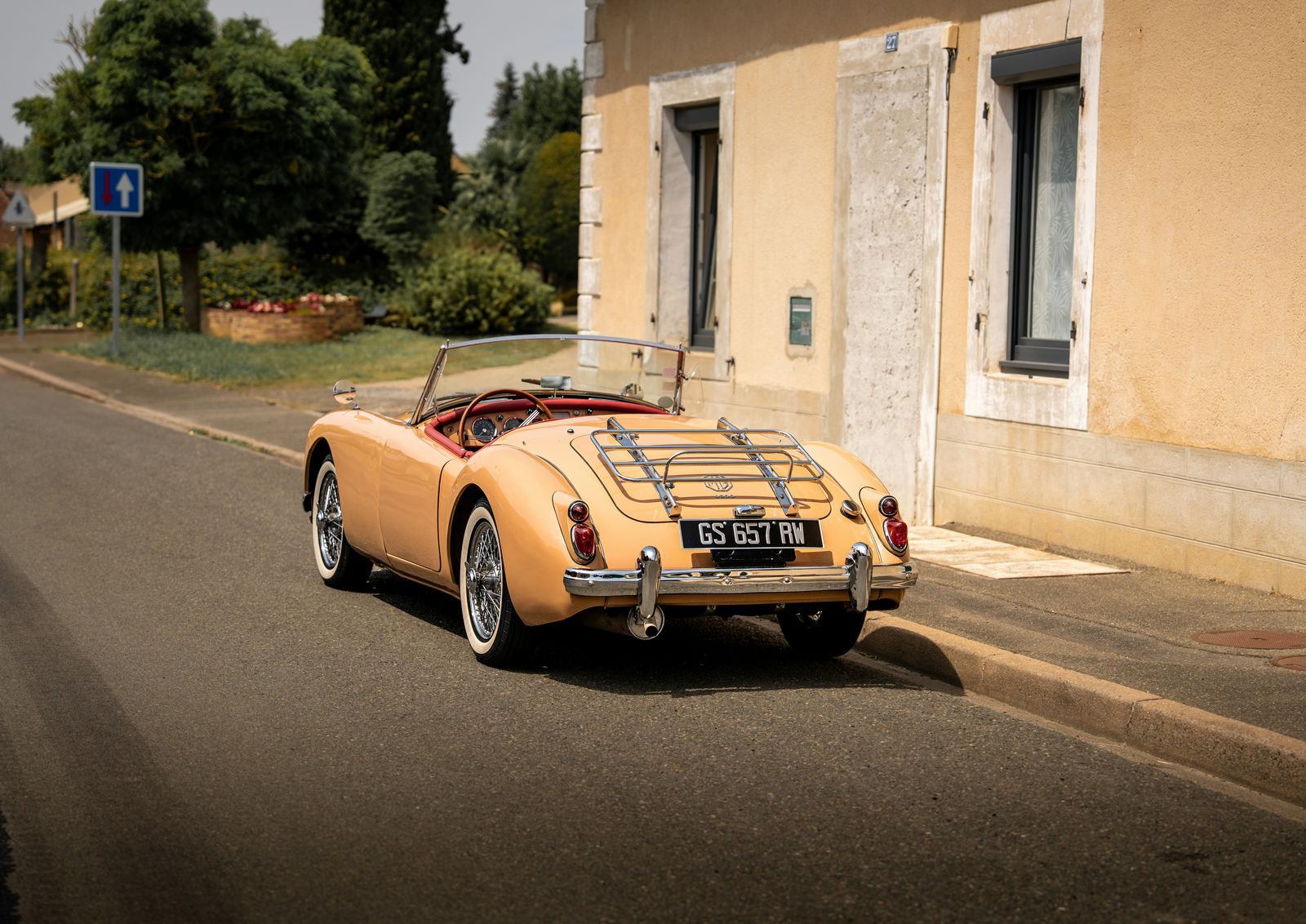
Driving in France: the unwritten rules, the kit, and the culture
The rules of the French road are mostly what you'd expect — but the customs aren't, and that's what trips Britons up. Why does that car keep flashing you? Why is the one in the fast lane indicating left for miles? What's the cardboard clock on everyone's dashboard, and will the police really fine you for a hi-vis jacket in the boot? Here's the practical, lived-in guide to driving here: the kit the law actually demands in 2026, the etiquette nobody writes down, and the parking that quietly generates most of the tickets.
The short version
- Learn the signals. A flash from ahead is a favour (police or hazard warning); a flash from behind means move over. A left indicator held on at motorway speed is deliberate, not a fault.
- Carry the right kit. A warning triangle and a hi-vis vest within reach of the driver (not the boot) are compulsory; headlamp deflectors and a "UK" plate too. The breathalyser and green card are no longer required, whatever old guides say.
- Everything's in km/h — rough conversion, km/h × 0.6 ≈ mph. The limit drops in the rain, and out of town it's lower than you'd expect.
- Watch the drink limit: 0.5 g/L, and near-zero in your first three years. Simplest rule: don't.
- Most first tickets are for parking — the blue-zone disque bleu especially. Get the paint and the disc right and you'll dodge nearly all of them.
Driving in France is, for the most part, a pleasure — the roads are good, the traffic outside the cities is light, and a route départementale through the countryside on a summer evening is one of the quiet joys of living here. The mechanics are familiar too: you drive on the right, the signs are logical once you learn them, and your instincts mostly transfer. What doesn't transfer is the unwritten stuff — the flashing, the indicators, the cardboard disc, the little rituals of French road life that no one explains because to the French they're simply obvious. That's the gap this guide fills, alongside the hard facts of what the law requires in 2026, because getting caught out on either the culture or the kit is easily avoided once you know.
The unwritten rules — what French drivers are telling you
Half of driving here is reading signals that aren't in any highway code. These are the ones that most often puzzle, or panic, a British arrival. Open each.
Custom, not lawWhy they flash their headlights at you
A flash in France usually means one of two things, and reading it right matters. Oncoming traffic flashing you is very often a friendly warning — a police check, a gendarmerie speed trap, an accident or a hazard ahead. Slow down and thank them silently. But a flash from behind, from a car sitting on your bumper in the fast lane, means the opposite: 'move over, I'm coming through.' It's not (usually) aggression so much as the French convention that the left lane is for overtaking only — so pull back into the right lane and let them pass. Both are custom, not law, but both are near-universal.
Not a mistakeWhy cars sit on the motorway with a left indicator on
This one baffles every new arrival. A car cruising in the middle or left lane with its left indicator blinking away isn't lost or forgetful — it's signalling 'I intend to stay out here and keep overtaking, don't expect me to pull in yet.' It's an informal courtesy on busy autoroutes, telling faster traffic the driver knows they're there and will move over when they've finished passing. You don't have to adopt it, but now you know it's deliberate, not a fault.
British instinct trapPriorité à droite — the rule that still catches people
The old priorité à droite — give way to traffic joining from your right — has been rolled back on most main roads, but it still lurks in towns, villages and unmarked junctions. If you're on a road with no priority markings and a car noses out from a side turning on your right, they may legally have priority over you, even though every British instinct screams otherwise. Look for the yellow diamond (you have priority) or its crossed-out version (you no longer do), and when in doubt in a town, ease off.
Mostly normal nowRoundabouts, and the two kinds
Most French roundabouts now work as you'd expect — traffic already on the roundabout has priority, signed vous n'avez pas la priorité or cédez le passage. But a handful of older ones, famously the Arc de Triomphe, still run on priorité à droite, meaning cars entering have priority and it's a controlled sort of chaos. On the ordinary ones you're fine; just know the exception exists.
New to France? Your car insurance probably needs to change
A UK policy won't follow you long-term. French assurance auto works differently — the no-claims history, the cover tiers, the price — and it's worth comparing properly rather than assuming your British insurer will carry on.
What the law actually requires in your car
The mandatory-kit rules have changed over the years, and plenty of guides (and glovebox leaflets) are out of date. Here's the current 2026 position — what you can be fined for, what's been dropped, and what's merely wise.
FineableCompulsory: triangle, hi-vis, deflectors, UK plate
Four things the police can fine you for not having. A warning triangle (to place at least 30m behind a breakdown). A hi-vis vest kept within the driver's reach — the glovebox, not the boot — since the whole point is that you can put it on before you step out onto the carriageway. Legally only one is required, and it's the driver's; but since a passenger who gets out should be visible too, most people sensibly keep one per seat. Headlamp beam deflectors on a right-hand-drive car, so you don't dazzle oncoming traffic. And a 'UK' identifier — sticker or built into the plate — as the old 'GB' is no longer valid.
Myth-bustedNo longer required: breathalyser & green card
Two things you may have been told to carry and no longer need. The breathalyser requirement was quietly dropped in 2020 — carrying one is sensible given the low limit, but you won't be fined for its absence. And the insurance green card hasn't been needed since August 2021; your normal policy covers you. Ignore older guides that still list these as mandatory.
RecommendedWorth having anyway
Not strictly required, but wise: spare bulbs (police can fine you for a blown one and expect it fixed on the spot), and a Crit'AirThe coloured windscreen sticker rating a vehicle's emissions for low-emission city zones. sticker if you'll drive into cities — the low-emission ZFE zones in Paris, Lyon and others check them, and an older car may be barred at certain times. A small first-aid kit and a torch never hurt either.
Speed limits, and the km/h you keep having to convert
The signs will feel alarmingly high until your brain recalibrates — 130 sounds a lot until you remember it's about 80 mph. The table below is your ready-reckoner; two quirks catch Britons out, both shown in it: the motorway limit drops in the rain, and the out-of-town limit is lower than you'd expect.
Two things the table can't show. First, how town limits are triggered: the 50 km/h limit begins automatically at the place-name sign as you enter a village and ends at the same sign crossed out as you leave — often with no "50" sign at all, so the village name is the instruction. Second, drink-driving: the limit is 0.5 g/L (well under the UK's 0.8), and a near-zero 0.2 g/L in your first three years. The honest advice is the simple one — don't drink and drive here at all.
Parking — where most newcomers actually get their first ticket
You're statistically far more likely to be fined for parking than for anything on the open road, because the systems are unfamiliar and the paint is easy to misread. Get these four things straight and you'll avoid nearly all of it. Open each.
Free but timedZone bleue & the disque bleu
Blue-marked bays are free — but timed. You need a disque bleu, a cardboard clock-disc you get free from a mairieThe town hall — the first port of call for a huge range of local admin., tabac or many shops. Set it to your arrival time, display it on the windscreen, and you get the posted free period — usually 1h30. No disc, wrong time, or hidden disc is a €35 fine. It's the single most common ticket a new arrival collects.
Pay & displayPaid parking: the horodateur
White bays in busier areas are usually paid, via an horodateur (the pay-and-display machine) or increasingly an app. Note your bay number if asked, pay for your time, and display the ticket. Sundays and lunchtimes are often free — the machine will tell you, if you can decode it.
Read the paintLine colours, and stationnement alterné
Rough guide to the paint: white lines are standard bays (free or paid per signs); blue means zone bleue (disc); yellow means no parking or reserved (deliveries, buses, residents). And on some narrow streets you'll see stationnement alterné — you park on the even-numbered side from the 1st–15th, the odd side from the 16th–end of the month, switching over mid-month. Miss the switch and you'll be ticketed.
€135 + towDisabled bays — don't risk it
Parking in a disabled space without a valid Carte Mobilité Inclusion is treated seriously: a €135 fine and, quite possibly, your car impounded. Even 'just for a minute' isn't worth it.
Bringing a car over, or facing the licence swap?
Registering a UK car (the carte grise) and — when you're actually required to — swapping your licence both have their traps. Pimpernel can check your case so you don't hit a wall on the ANTSAgence nationale des titres sécurisés — the portal for vehicle papers and driving-licence exchanges. or carte-grise portals.
A few more things worth knowing
Some quick ones that round out the picture. Radar detectors are seriously illegal — even switched off in the boot, they carry a minimum €1,500 fine, and many sat-navs sold in the UK need their speed-camera alerts disabled before you cross. Headphones and earbuds are banned while driving. On the motorway, most autoroutes are toll roads (péage) — take a ticket on entry and pay on exit, by card or the telepéage tag, and use the bright-orange emergency phones every 2km rather than your mobile if you break down. And toll-booth lanes matter: the orange "t" lane is for tag-holders only; look for the green arrow or the card symbol.
None of this is difficult, and most of it becomes second nature within a few weeks. But the culture in particular is worth front-loading, because it's the invisible layer — the flash, the indicator, the priorité lurking at a village junction — that turns an anxious first month of French driving into the genuine pleasure it should be. Learn the signals, carry the kit, keep a parking disc in the glovebox, and the French road opens up to you.
The car has its own little pile of admin
Registration, the licence swap when it's finally due, insurance renewals, the Crit'Air sticker — small jobs, easy to forget. Pimpernel Life keeps the car's paperwork on the same dated plan as the rest of your move, and reminds you before anything lapses.
- Car-admin reminders
- The vehicles & licence guides
- Document checklists
- Every Library guide, in depth
Bringing your own car over?
Importing and registering a UK vehicle — the carte grise — is a separate process with its own steps. Here's the full walkthrough.
Read: Bringing & registering a car →Do you need to swap your licence?
Most UK drivers don't have to exchange their licence yet. Our guide explains exactly when you do, and how the ANTS process works.
Read: Exchanging your UK driving licence →Straight from the source
The current rules on equipment, speed and alcohol are on securite-routiere.gouv.fr; the everyday legal detail is on service-public.fr.
The equipment rules, speed limits, alcohol limits and parking fines here are current for 2026 and drawn from official and specialist sources, but road rules change and enforcement varies locally. The cultural conventions described (flashing, indicators, priorité) are custom rather than law and are offered as practical observation, not legal instruction. Confirm current requirements with official French sources before you travel or act. This guide is general information, not legal advice.