Emergency numbers in France: who to call, and what to say
The number you least want to need, and most need to know before you need it. Here are the French emergency numbers, which one to call for what, and the handful of French words that get help moving — laid out so you can find them in the ten seconds that count. If in doubt, dial 112.
The short version
- 112 is the one to remember. It's the European emergency number, works from any mobile — even locked, even with no French SIM — and its operators are the most likely to speak English. When in doubt, dial it.
- 15 is medical (SAMU — illness, ambulance), 17 is police, 18 is the fire brigade (pompiers — fire, but also road accidents and rescues). All free.
- 114 is the emergency line you can text — for deaf, hard-of-hearing, or anyone who can't speak on the phone. It takes SMS and video.
- Don't drive a seriously ill person yourself. Call 15 or 112 — a doctor answers, guides you, and sends the right help.
- Out of hours but not an emergency? Call 15 (the safe national fail-safe), or in most areas 116 117 for the on-call doctor, or SOS Médecins on 3624 for a home visit.
- Pharmacy at night or on a Sunday: the pharmacie de garde rota is posted on every pharmacy door, searchable free at 3237.fr, or by phone on 3237 (a paid line).
- You will be treated regardless. Emergency care is given whether or not you have a carte VitaleThe green card that makes French health reimbursements automatic at the doctor or pharmacy., a GHIC, or the means to pay. Never delay the call over paperwork.
This is the one guide on Pimpernel we hope you never have to use in anger — and the one most worth reading while nothing is wrong. In an emergency, nobody has the presence of mind to research phone numbers or conjugate French verbs. The trick is to have the shape of it already in your head: one number that always works, a rough sense of who handles what, and three or four French phrases that get a response. Read this once now, and it'll be there when you need it.
If you take nothing else away, take this: 112. It is the single European emergency number, it works from any phone across the whole EU, it functions even on a locked handset or one with no French SIM, and — crucially for a Briton — its operators are the ones most likely to speak English or reach someone who does. You cannot go wrong dialling 112. Everything below is refinement on that one safe default.
The numbers, and who answers
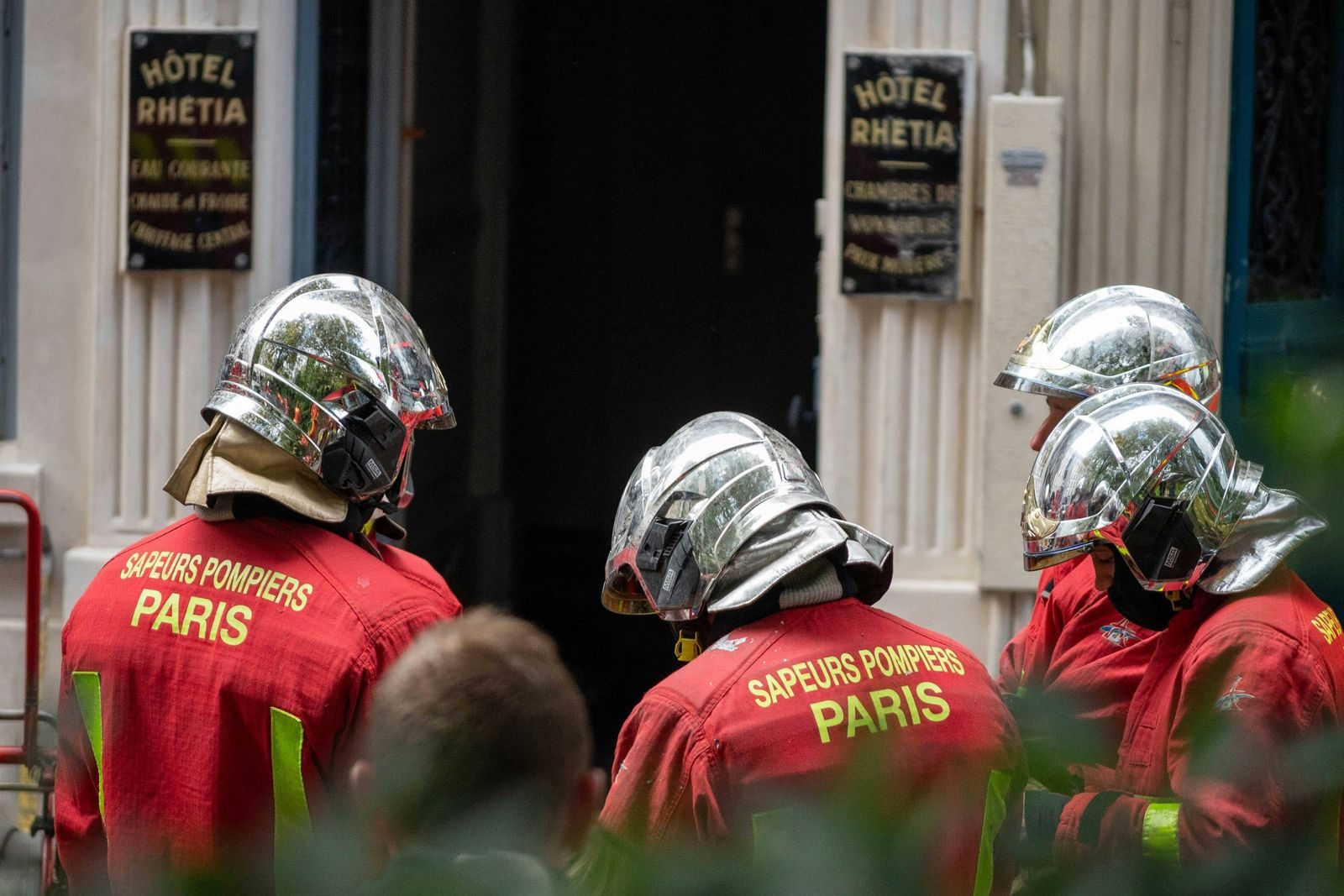
The three core French numbers each have a home service. 15 is the SAMU — the medical line. A call is answered by a doctor-led regulation centre, and it's the number for anything where someone is ill: chest pain, difficulty breathing, a suspected stroke, unconsciousness, heavy bleeding, a bad fall, poisoning. 17 is the police (or, in rural areas, the gendarmerie) — for a crime, an assault, or immediate danger to people. 18 is the sapeurs-pompiers, the fire brigade — but the pompiers are France's front-line rescue service, so 18 is also right for a road accident, a gas leak, a flood, or a trauma rescue, not only fire.
The distinction that matters less than you think
15, 18 or 112 — don't agonise, just call
Britons often freeze trying to pick the "right" number. Don't. France's 15, 18 and 112 centres are increasingly interconnected, and a genuine emergency call to any of them will get help on its way. If you can, match the number to the problem — 15 for illness, 18 for fire and accidents, 17 for crime. If you can't, or you're flustered, or you're a visitor, dial 112 and let the operator route you. The dangerous choice is hesitating, not picking the "wrong" three-digit number.
If you can't speak on the phone: 114
One number deserves to be better known than it is. 114 is France's emergency line for people who are deaf, hard of hearing, or otherwise unable to make a spoken call — and it works by SMS text and video, free, around the clock, for every kind of emergency. It's worth saving in your phone even if you don't need it yourself: it's the number to text if you're ever in a situation where speaking aloud isn't safe or possible. There's an "Urgence 114" app too.
What to say when you call
You do not need fluent French to call for help — but a few words move things along, and the operator will do the rest. Open with "Bonjour, do you speak English?" — on 112 especially, there's a good chance they do, and the medical 15 centres can usually find an English speaker. If you need to say what you want in French, these are the ones to know:
- "C'est une urgence" — it's an emergency.
- "Je voudrais une ambulance" — I need an ambulance.
- "Je voudrais les pompiers" — I need the fire brigade.
- "Je voudrais la police."
- "Mon adresse est…" — my address is… — then your town, street, building, and any landmark.
The single most important thing you give them is where you are — precisely. Town, road, house number, and a landmark if you have one. After that: stay on the line. Don't hang up until you're told to. The operator will ask questions, keep you calm, and can talk you through first aid while help is on the way.
When it's urgent, but maybe not 15
Not everything that goes wrong out of hours is a 15-level emergency. A feverish child at 11pm, a nasty but not dangerous cut, a prescription you urgently need — these have a gentler path. In most of the country you can call 116 117 to reach the on-call doctor (the médecin de garde) in the evenings, at weekends and on public holidays; it's free. SOS Médecins, on 3624, will send a doctor to your home (charged as a consultation). And you can always call 15 — the medical regulator there will assess you and point you to the right level of care, which is exactly what France now wants you to do rather than turning up at urgences unnecessarily.
A 2026 note worth knowing
"Call 15 first" is now the official message
France is steadily merging emergency and out-of-hours GP care into a single front door called the Service d'Accès aux Soins (SAS), reached by calling 15. A medical regulator triages your call — genuine emergency to the SAMU, everything else routed to a doctor or an appointment — so that hospital urgences aren't overwhelmed. The rollout is nearly nationwide but not perfectly uniform, and 116 117's hours still vary by department. The practical upshot for you is simple: 15 is the reliable national number for any out-of-hours medical question, and it will send you the right way.
The pharmacy, out of hours
French pharmacies take turns staying open at night, on Sundays and on public holidays — the pharmacie de garde. To find the one on duty: every pharmacy posts the current rota on its door or window, so a walk to your nearest one tells you where to go. You can search for free at 3237.fr, or ask at the mairieThe town hall — the first port of call for a huge range of local admin.. There's a phone line, 3237, but note it's a paid service (around €0.35/minute), so the website or the notice on the door is usually the better bet.
Poison, and a word on paying
For a suspected poisoning — a child who's swallowed something, a chemical exposure — the safe move is to call 15 or 112, who will connect you to or advise from a poison centre. France's centres antipoison are regional rather than one national number, so 15 is the quickest route in a genuine emergency.
Finally, the reassurance that matters most: in France, emergency and life-saving care is given regardless of your papers or your ability to pay. If you're a resident you'll use your carte Vitale; if you're visiting, a UK GHIC card covers medically necessary state care (and you should carry travel insurance on top, for repatriation and private care). But none of that is a reason to hesitate. Nobody at the other end of 112 is going to ask for a card before they send help. Make the call.
Getting set up with French healthcare?
Knowing the emergency numbers is one thing; being properly plugged into the system is another. Our healthcare guide covers the carte Vitale, the S1A UK form that makes Britain pay for your French healthcare, mainly for state pensioners., PUMAProtection universelle maladie — the scheme that gives legal residents access to French state healthcare. and the mutuelleTop-up health insurance that covers the part the state doesn't. — so day-to-day care is sorted long before any emergency.
Read the healthcare guide →Just arrived, or visiting?
If you're still finding your feet, our residency guide explains the permits and paperwork that put you properly into the French system — including the health cover that sits behind all of this.
Read the residency guide →One useful email, every fortnight
Pimpernel is building the practical side of British life in France — the tools, the calendar, and the guides like this one. Join the list for the pieces that help you feel at home, and prepared, wherever you are.
Get the fortnightly email →This guide offers practical, general information to help you find emergency help in France; it is not medical or legal advice, and it is not a substitute for the emergency services themselves. In any emergency, call 112 (or 15, 17 or 18) without delay. Phone numbers, the SAS rollout and out-of-hours arrangements can change and vary by area — 116 117 availability in particular differs between departments — so where it matters, confirm your local arrangements with your mairie, your doctor, or your regional health agency (ARS). When in doubt, dial 112 and stay on the line.